« The French ZACs, Ritratto di un’epoca », article dans « Domus », 2019
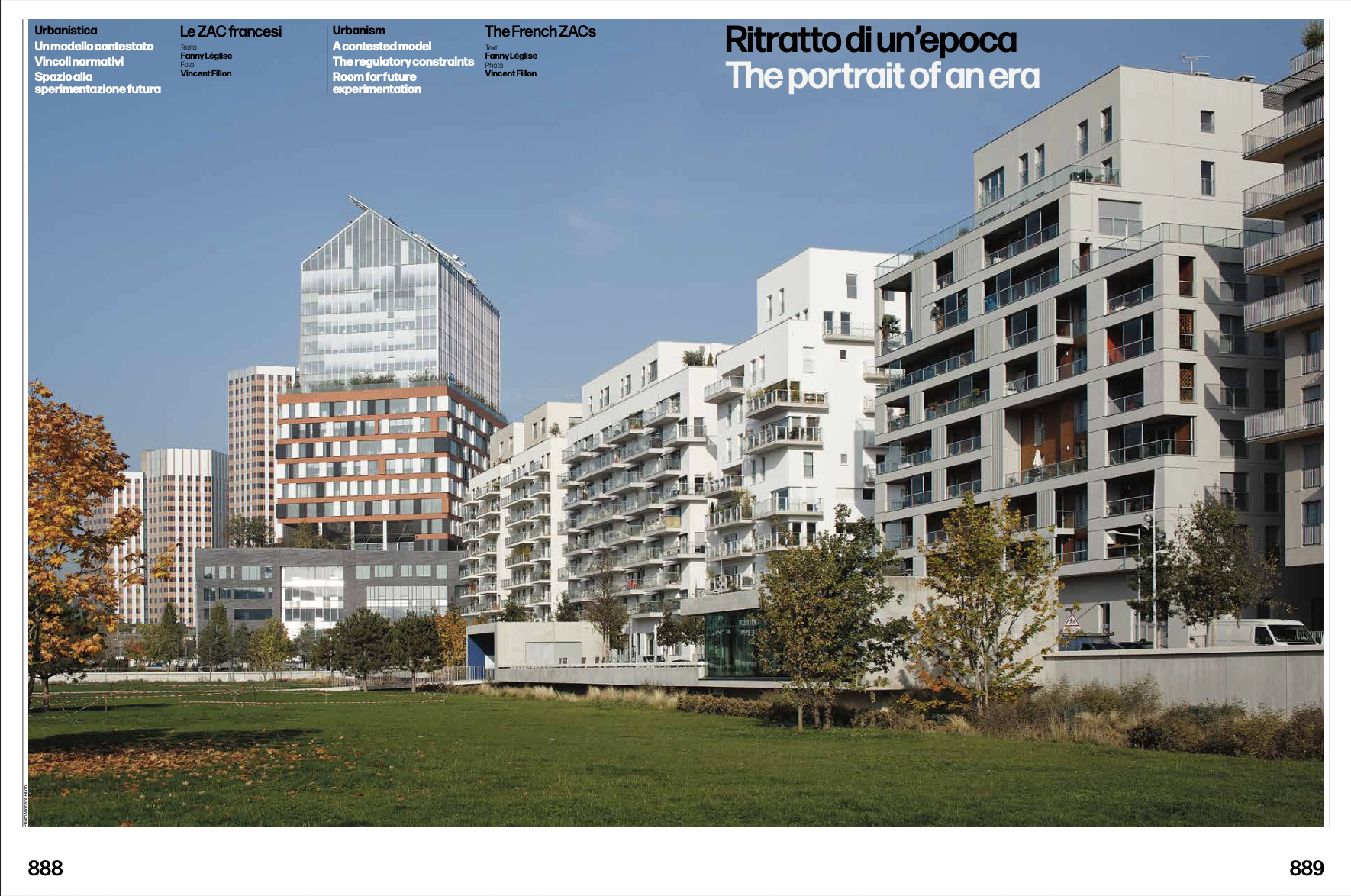
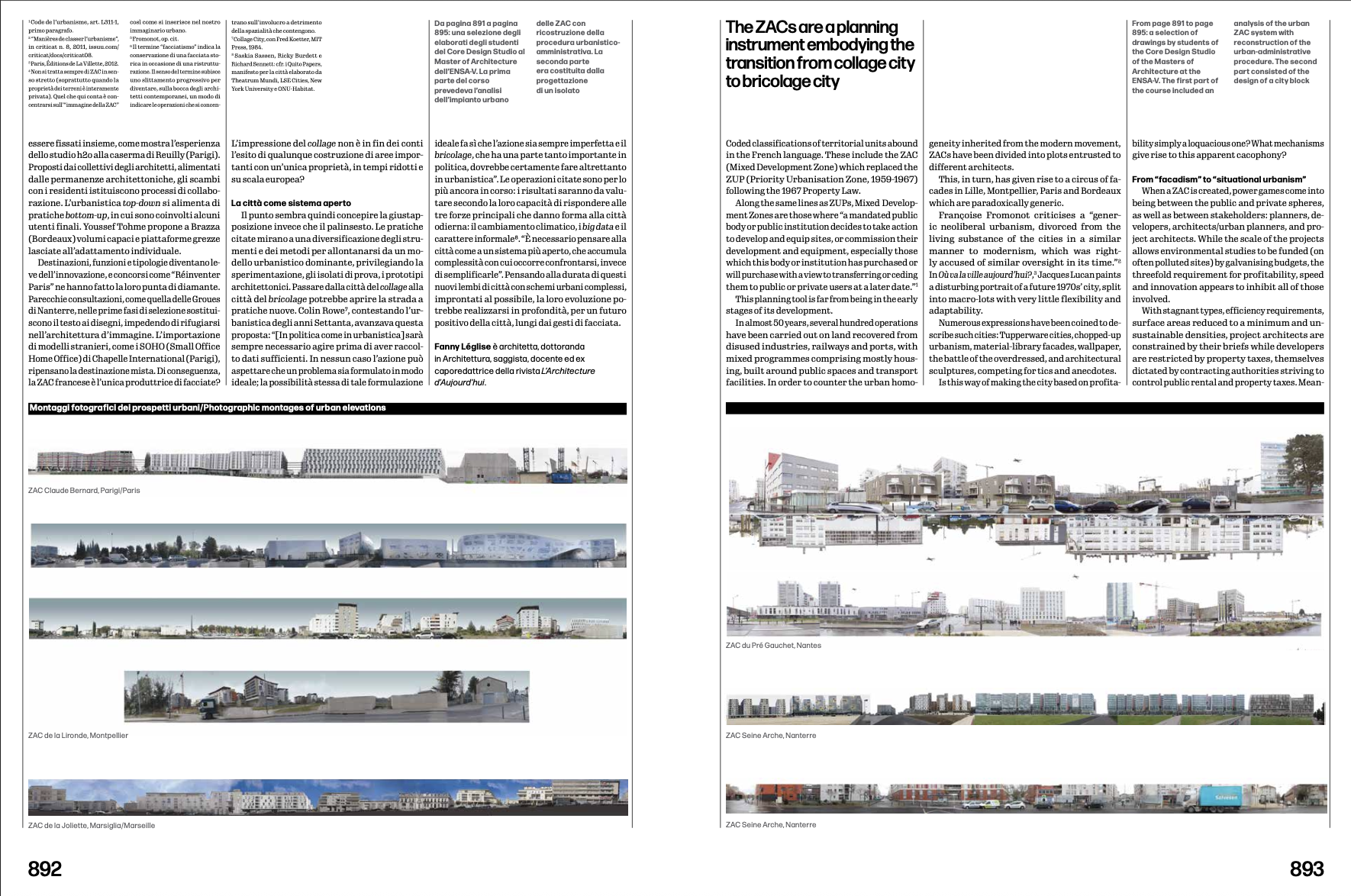
The ZACs are a planning instrument embodying the transition from collage city to bricolage city. Coded classifications of territorial units abound in the French language. These include the ZAC (Mixed Development Zone) which replaced the ZUP (Priority Urbanisation Zone, 1959-1967) following the 1967 Property Law. Along the same lines as ZUPs, Mixed Development Zones are those where “a mandated public body or public institution decides to take action to develop and equip sites, or commission their development and equipment, especially those which this body or institution has purchased or will purchase with a view to transferring or ceding them to public or private users at a later date.”1 This planning tool is far from being in the early stages of its development. In almost 50 years, several hundred operations have been carried out on land recovered from disused industries, railways and ports, with mixed programmes comprising mostly housing, built around public spaces and transport facilities. In order to counter the urban homogeneity inherited from the modern movement, ZACs have been divided into plots entrusted to different architects, extrait de l'article paru en anglais et italien dans « Domus » n°1038, septembre 2019.